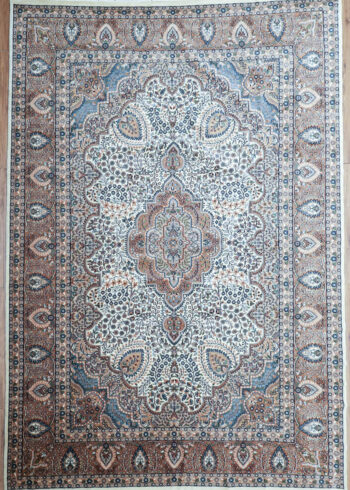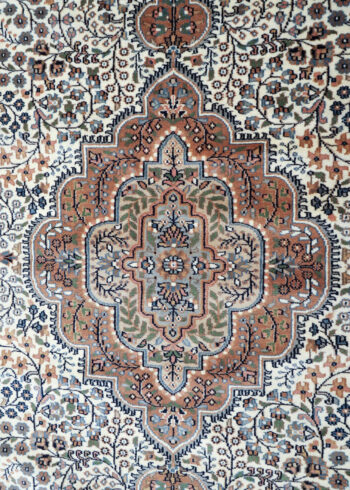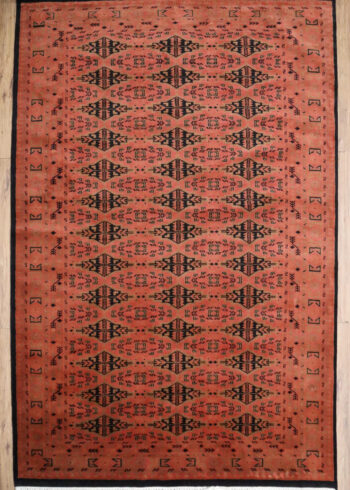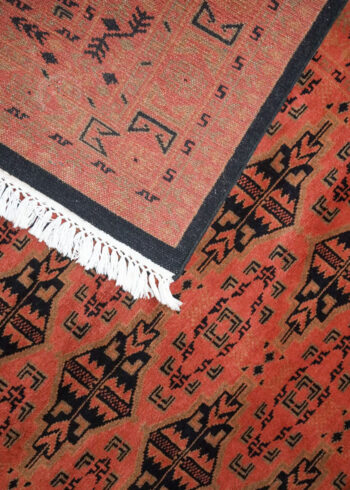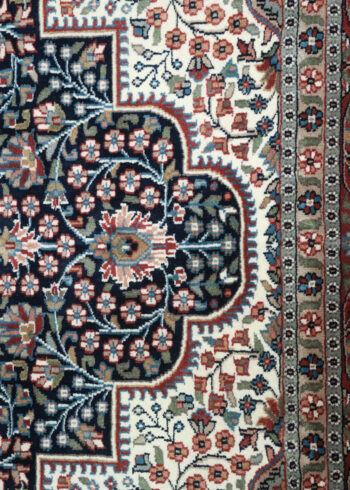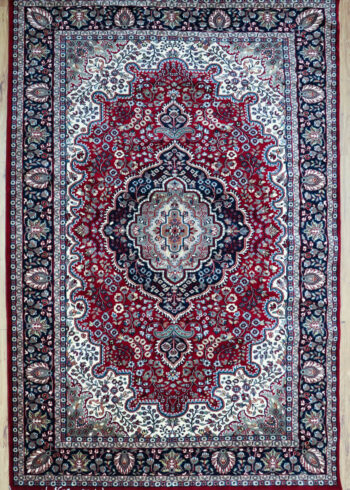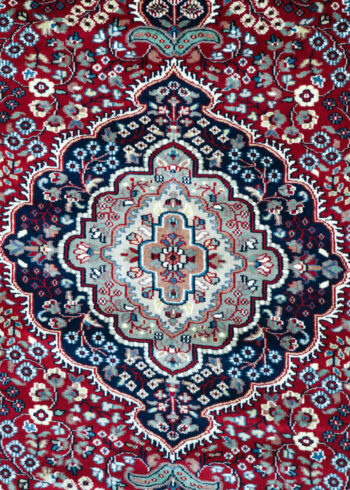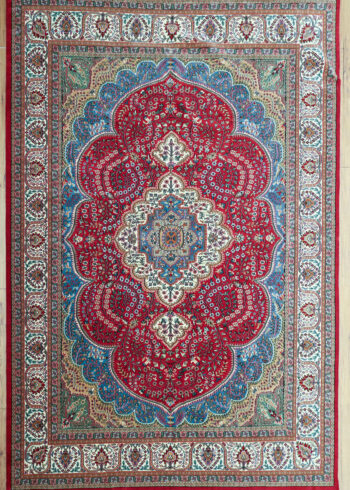
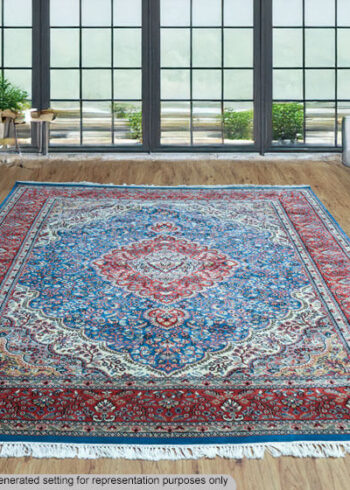
Carpets and Rugs from India
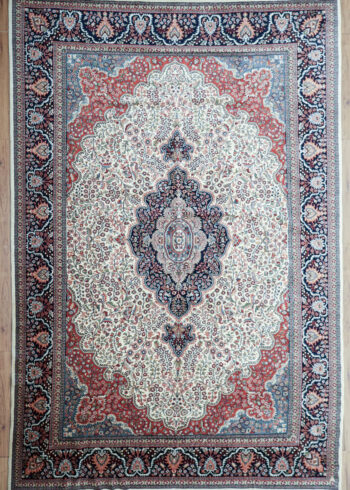
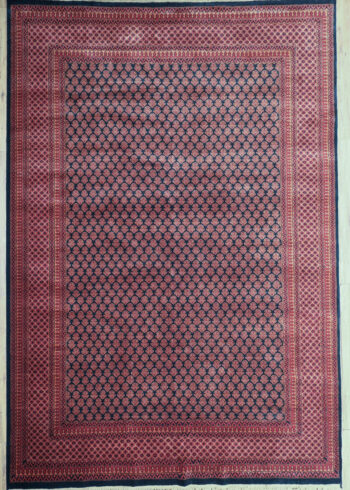
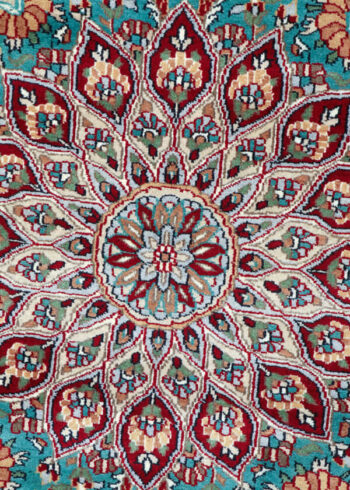
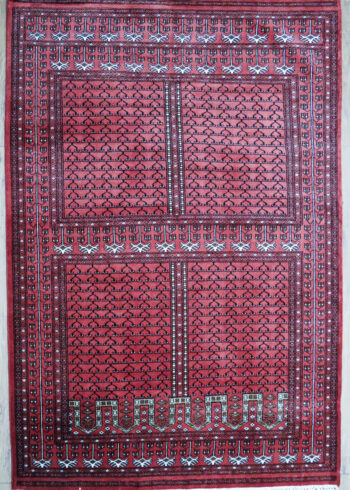
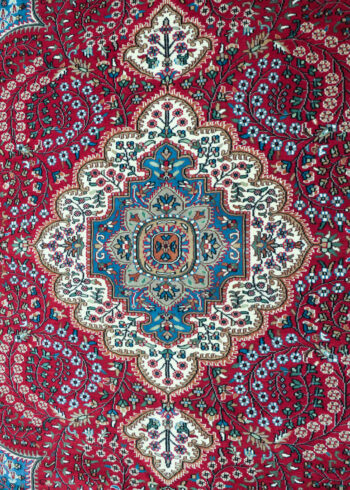
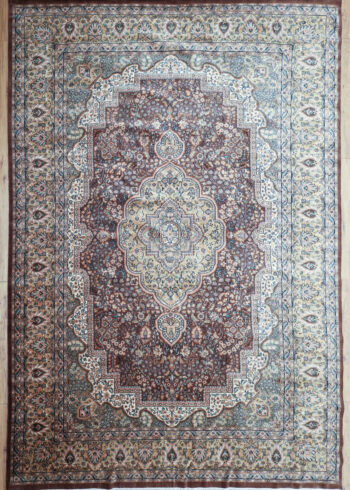
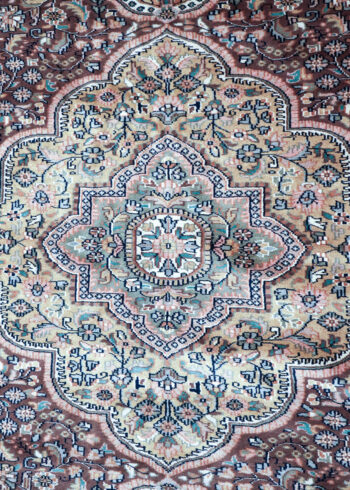
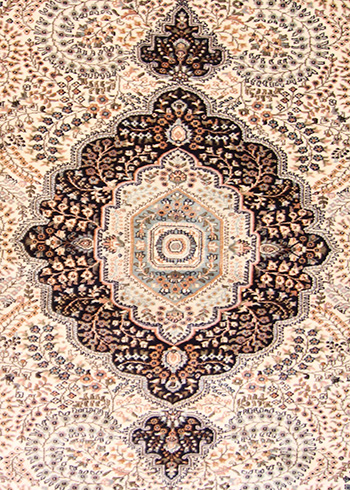
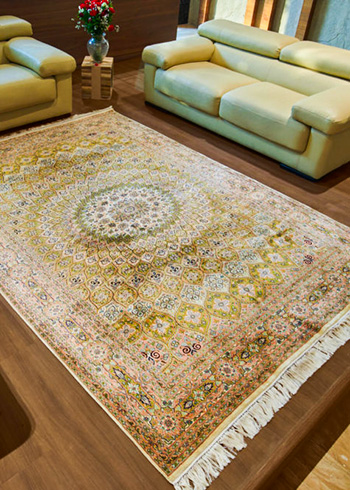
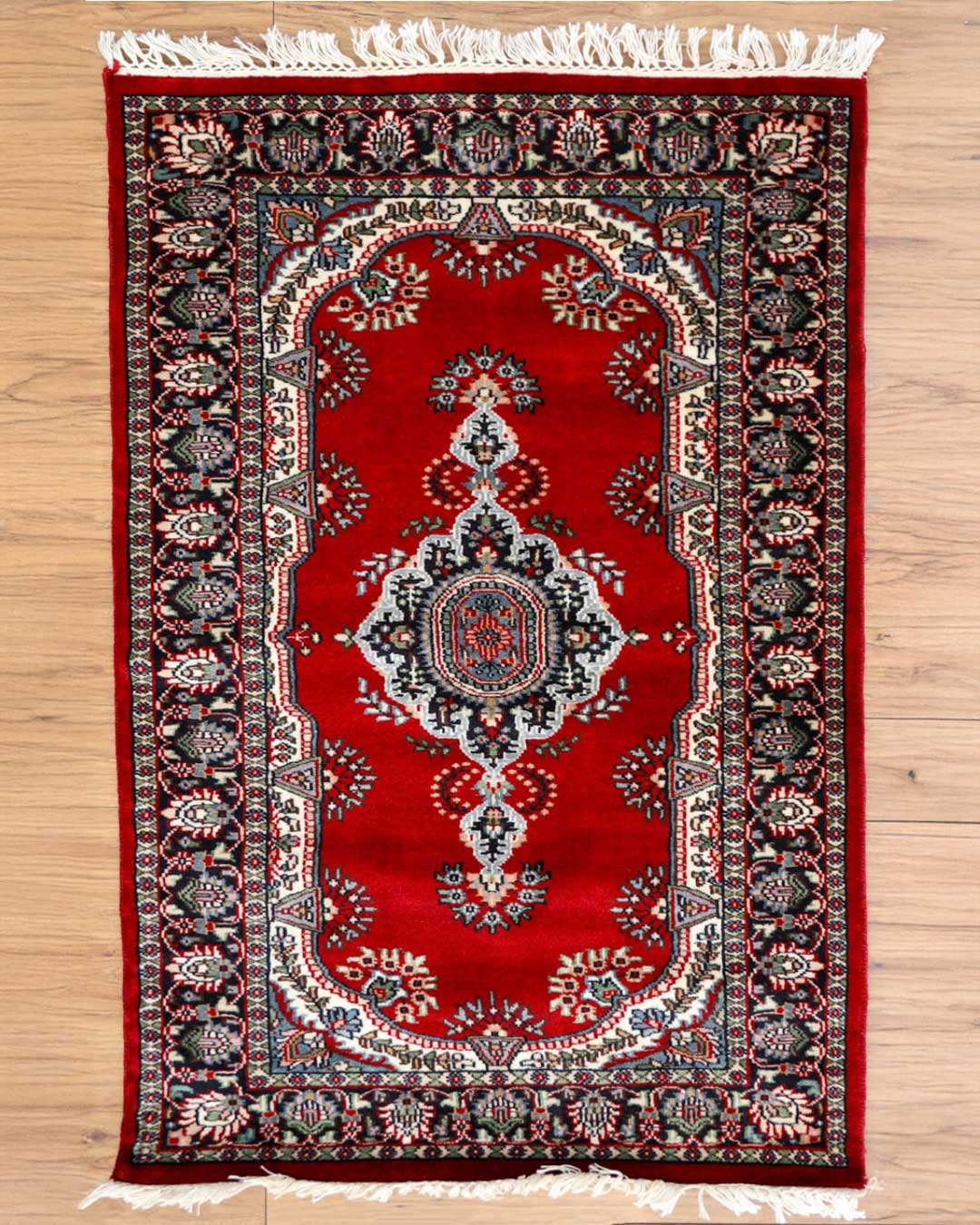
The primary aspect that characterizes Indian carpets is their singular,
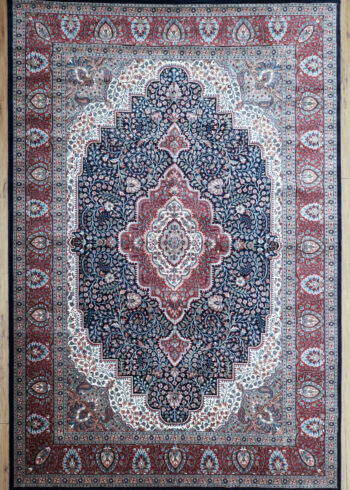
intense palette, based on yellow, pink, light blue, and green and best
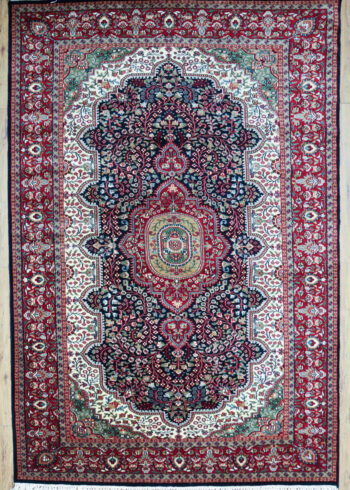
displayed in the typical bluish red known as lac red, used only for the
grounds of fields. The designs, although indebted to the Persian style, are
distinguished by their asymmetry and strong sense of the pictorial, with
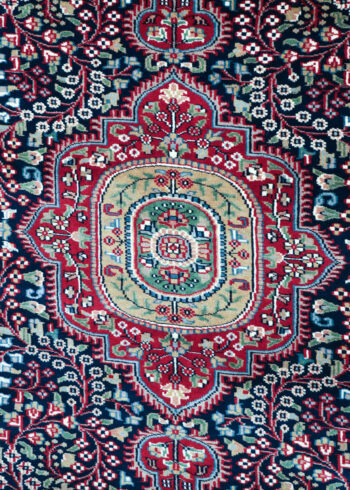
close attention to reality and detail. The decoration shows a preference for
naturalistic floral designs and figural scenes arranged on directional
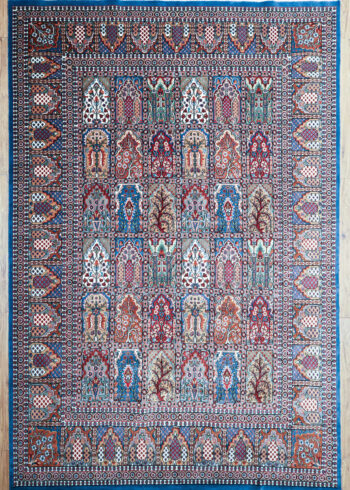
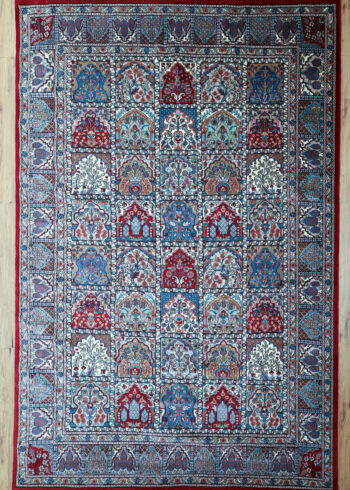
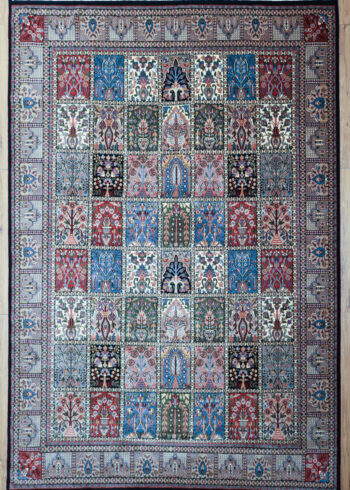
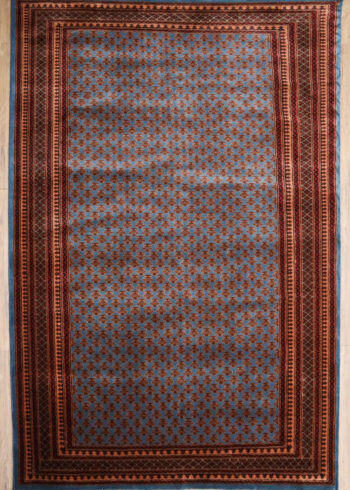
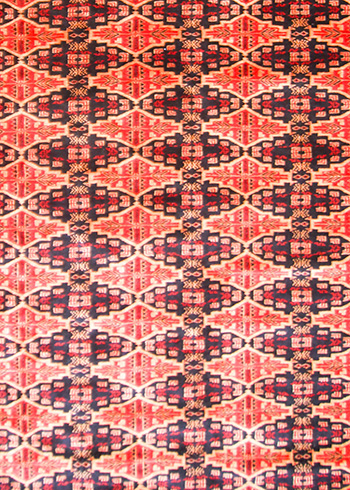
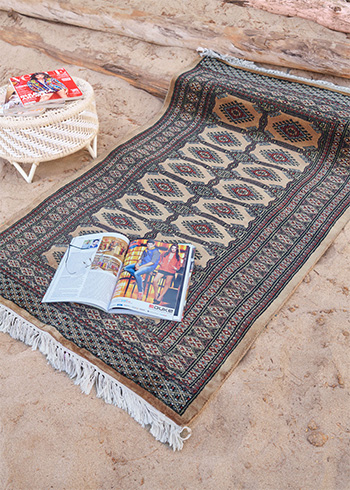
layouts, and the compositions are not elaborate; the most common layouts
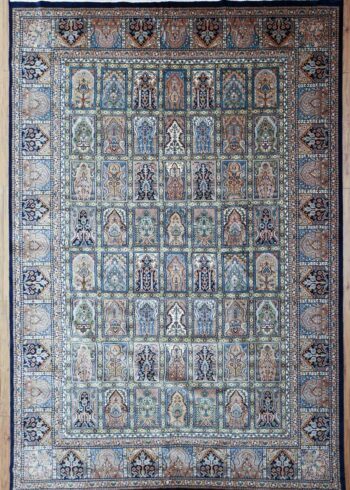
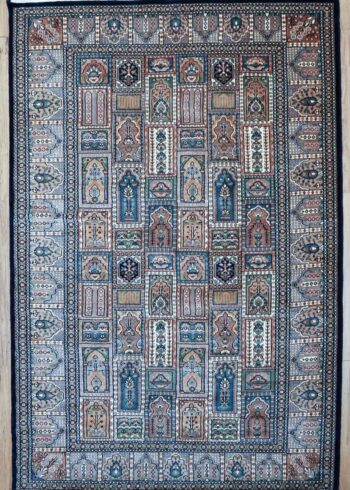
involve full-field distributions using rows or grids, in-and-out palmettes,
and prayer rugs.
Because of this naturalistic taste, Indian carpets lack
characteristic decorative motifs, aside from those few borrowed from Persia
or other production areas, such as Herat botch, and cloudbands. The general
character that informs these carpets is thus very rich, aristocratic, and
refined, though without the ideal or abstract elegance common to the Persian
manner, and seeming instead concrete and exuberant, with a sensibility that
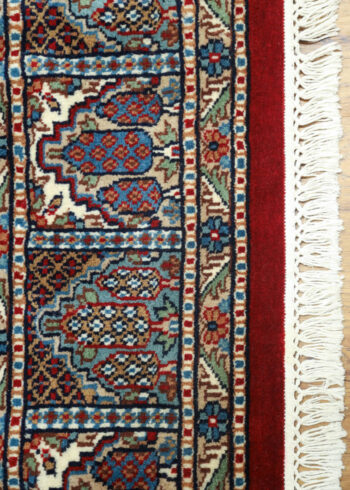
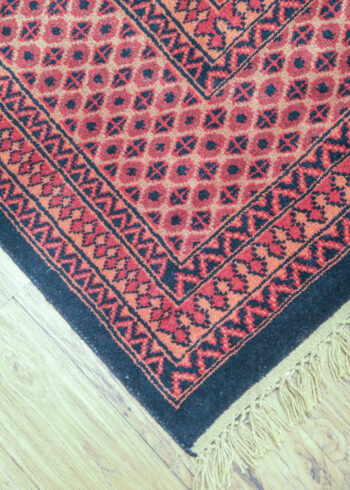
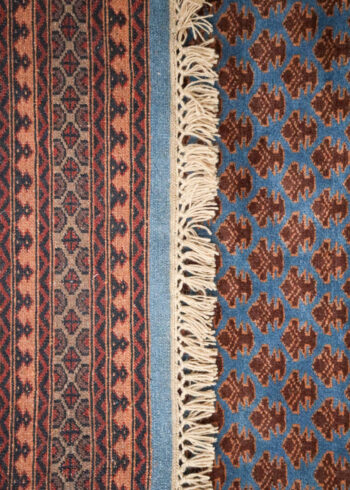
verges on the carnal. All Indian carpets are made using the asymmetrical
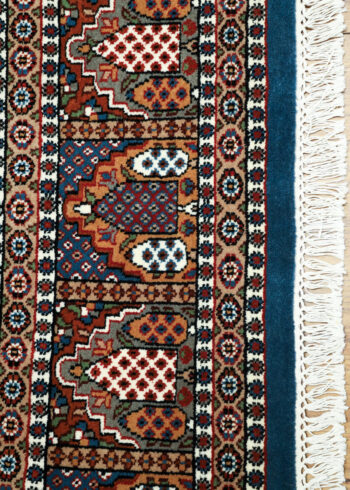
knot and stand apart technically because of their particularly dense
knotting, well suited to rendering realistic figural details. The foundation
is usually of cotton and the pile wool; in northern regions the soft and
shiny wool of Kashmir is used. Sometimes silk is used both in the foundation
and for the pile. The pile is usually trimmed low. The carpets are usually
medium or large in size, reaching as much as 150 x 240 inches.
Birth of the Indian carpet
Probably because of the region's warm climate, which does not require
protection from cold, the knotted carpet was unknown in India until the 16th
century. Indeed, the knotted carpet exists in India not because of an
age-old tradition but because of an act of importation, carried out by the
emperor Akbar (reigned 1556-1605).
Akbar, the greatest ruler of the Mogul dynasty (1526/27-1858), was an
admirer of Safavid art and had artists and artisans sent from the Persian
court to set up specialized workshops in Agra and Fatehpur Sikri, the two
capitals of his empire, as well as in Lahore, in modern-day Pakistan.
Therefore in India the knotted carpet originated as a product made
exclusively for the court and conceived of as a precious object of
furnishing designed to beautify the palaces of the Mogul court. Because of
this close connection to the Mogul court, the knotted carpet was inevitably
destined to decline when that court declined, which it began to do toward
the end of the 18th century.
The Indian carpet came into being to serve the same purposes as the
"classic" Persian carpet and, in fact, imitated both Persian technique and
style: asymmetrical knots with fine knotting; use of precious materials,
such as the highest-quality wool from Kashmir and sometimes even silk and
gold and silver threads; production based on cartoons furnished by court
miniaturists; curvilinear style; and designs of the floral and figural
character. Given the lack of intact examples from the 16th century, the most
important existing records of this direct dependence on the art of Persia is
offered by the so-called Indo-Isfahan or Indo-Persian carpets, datable to
the 17th and 18th centuries and characterized by Safavid designs composed of
in-and-out palmettes, herati, and sometimes cloudbands in orderly full-field
arrangements. Initially attributed to Persia, and more precisely to Herat,
these carpets were later divided into two groups based on their palettes and
levels of calligraphic sense: those with the most intense colours, with
lac-red grounds and designs with pale outlines or no outlines at all, were
taken to show Indian sensibility, and the others were said to show Persian
taste. Since these are such minor differences, the recent tendency has been
to leave provenance undecided and to see these carpets as proof of the close
relationship between the Safavid and Mogul courts and attribute them to a
common Indo-Persian style.
The Mogul Style
Over the course of the 17th century, as local miniaturists and artists
slowly replaced the Persian artists and artisans in the great workshops, a
more specifically Indian character began to develop in the Indian carpet,
rendering it less dependent on Persia and better suited to representing the
taste and needs of the region. The Mogul style was influenced by the passion
for botany of Akbar's son, the emperor Jahangir (reigned 1605-1627). Under
his rule all the arts tended toward representations of a floral character,
which were rendered with such naturalism and presented such a variety of
species that they competed with Western herbals. Under the reign of
Jahangirs son and successor, Shah Jahan (reigned 1628-1658), this style
reached full expressive maturity, evident in the perfect realism of its
renderings and close attention to detail.
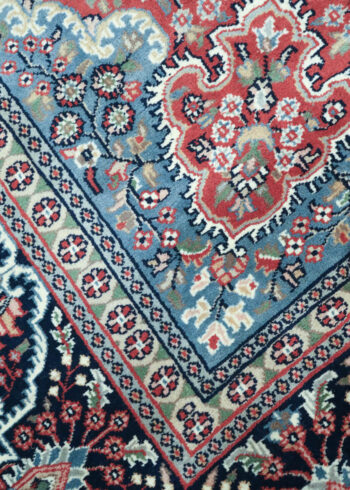
Indian dyers, who were capable of obtaining, usually by means of repeated
dyeings, singular shades and colours so intense they seem enameled. Typical
of Indian carpets is lac red, with its characteristic bluish reflections,
obtained from an insect of the cochineal family known as lac and used in
grounds; against this colour stand out designs coloured light yellow,
mustard yellow, light led, pink, light blue, midnight blue, light green,
emerald green, orange, black, and brown.
Another particularity of these carpets is the way colours are combined, for
this is done without outlines, even when two different tones of the same
tint are used side by side, such as red and pink or blue and light blue. The
borders are characterized by a dark ground, rendered using a strong
green-blue, suitable for making contrasts with the lac red of the field.
Antique types
Almost all existing antique Indian carpets are held in major collections or
museums; datable to the 16th to 17th centuries, they can be grouped into
decorative types that show varying degrees of debt to central or eastern
Persia. Given their stylistic uniformity, the areas where they were made
cannot be established with certainty.
Floral carpets
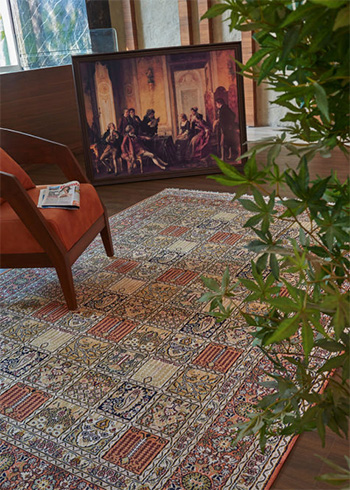
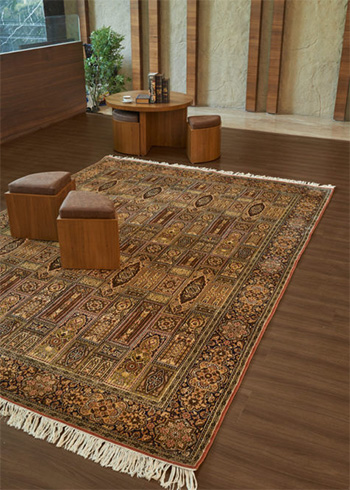
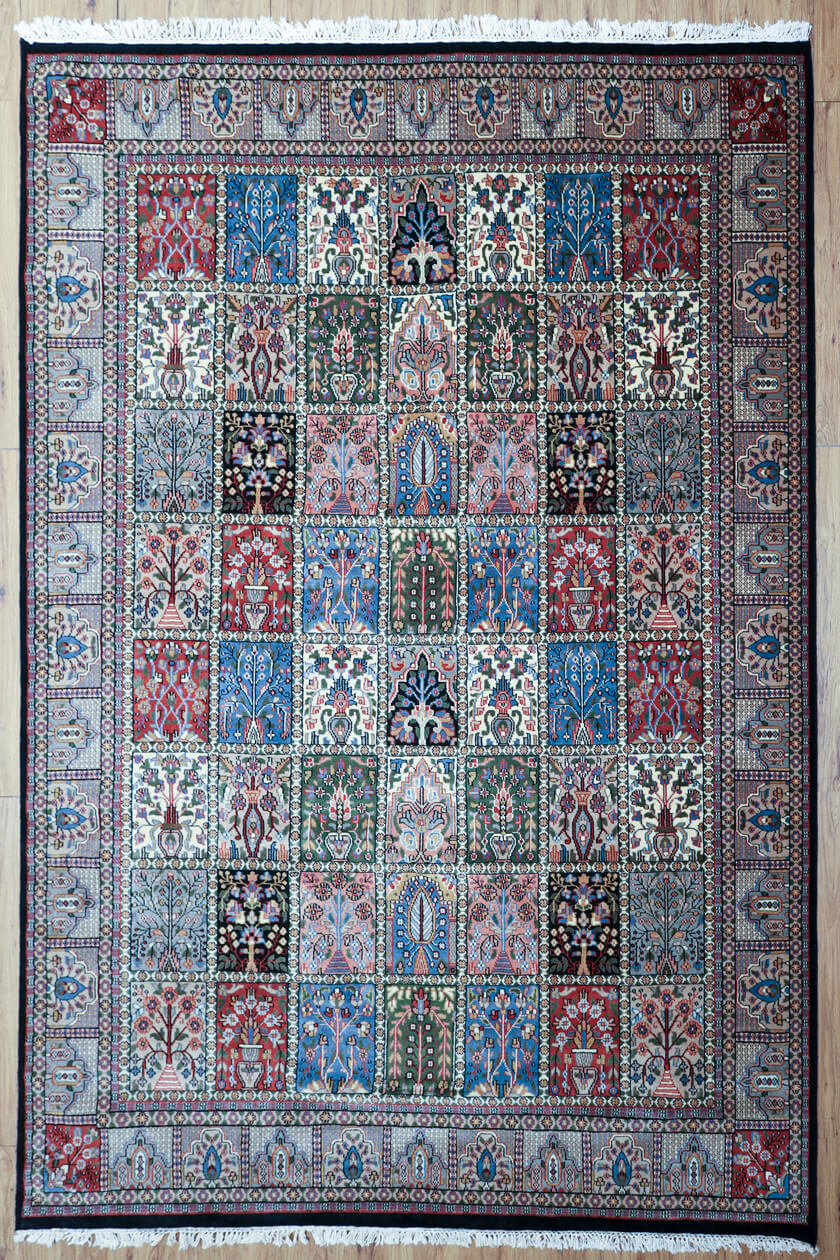
Floral carpets are the most common type, and most are attributed to Lahore.
The flowering plants, often of many different species, are arranged full
field within a grid, the shape of which varies, or are arranged in the more
typically Mogul style of horizontal rows. In one 18th-century layout, the
flowers are made small and presented in dense arrangements, each flower
joined to another by extensions of its stem, a scheme directly reminiscent
of Persian floral carpets. Also included in this type are the Indo-Isfahan
carpets and certain rare examples with trees, which are often presented with
flowering foliage.
The subjects of figural carpets sometimes reproduce episodes from Indian
epics but more often present hunting scenes. These carpets have greater
vitality than Persian figural carpets in part because of the asymmetrical
distribution of their elements but primarily because of the size and
pictorial importance given the figures with respect to the floral ground.
Furthermore, the figures are usually shown in movement. Typically Indian is
the presence of an elephant, and characteristic of these carpets is the
design of the border, often curiously enlivened by grotesque masks. Included
within this group are examples decorated with the waqwaq tree.
Prayer rugs
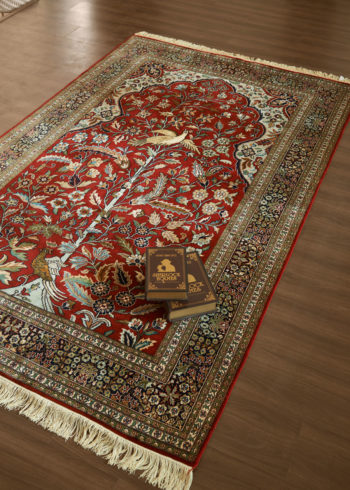
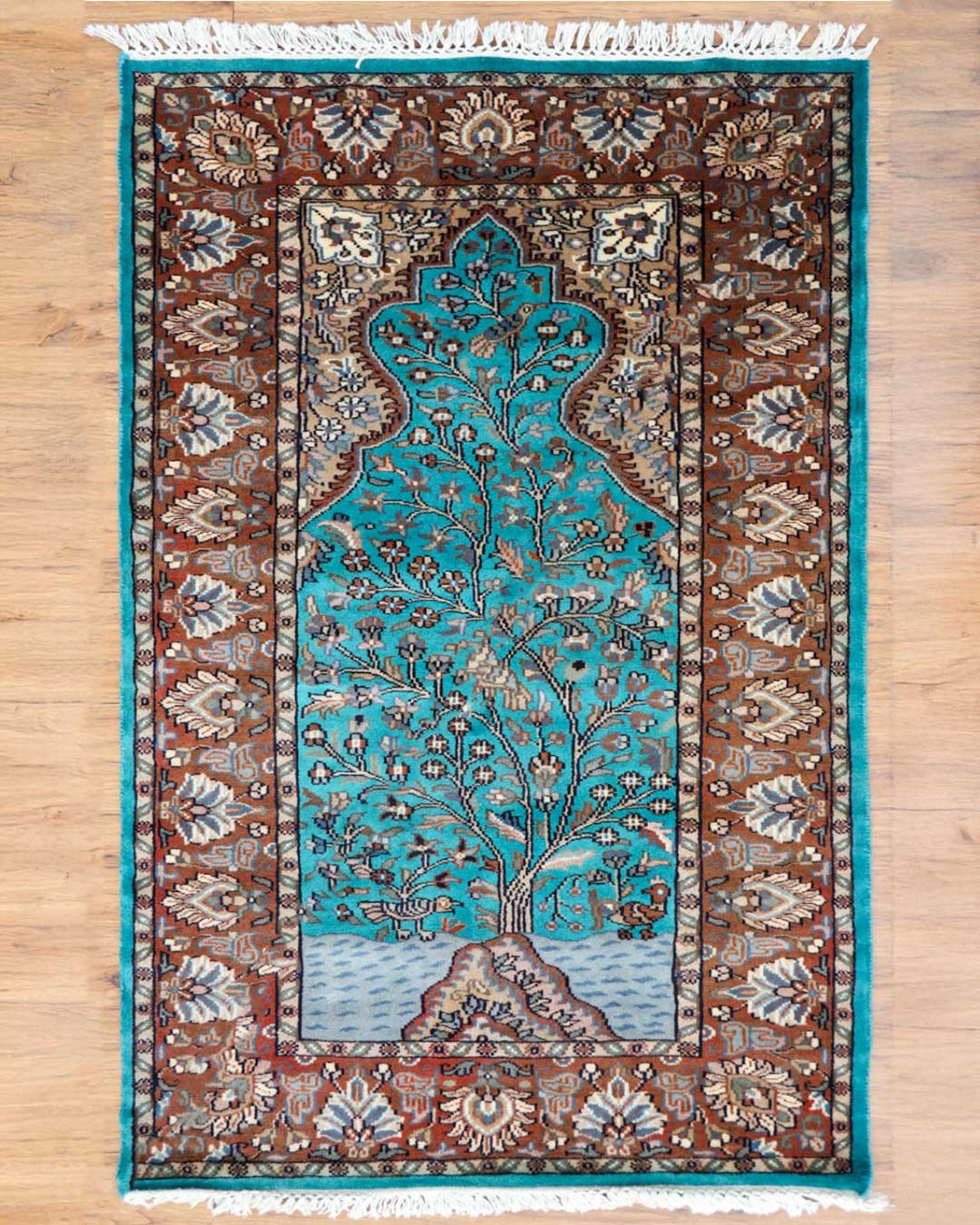
The Mogul interpretation of the prayer rug, a type foreign to Indian
religious life, shows the traits characteristic of Mogul style. Although
clearly influenced by Persia, Mogul prayer rugs are composed of a highly
articulated mihrab, the interior field of which is coloured lac red and
bears Mogul flowering plants, shown in large size to indicate the realistic
transformation of the symbolic tree of life. In the so-called millefleurs
prayer rugs, datable to the 18th century, the field is instead thickly
covered by myriad tiny flowers of diverse species and always growing from a
single plant; the niche of these rugs is often flanked by two typical
cypresses.
Portuguese carpets
The so-called Portuguese carpets, discussed among the types of Persian
carpets, are variously attributed to northern or southern Persia or to the
Portuguese colony in Goa, India. Aside from the people in European dress
that appear on these carpets, the Indian provenance hypothesis is supported
by the particularly intense and brilliant colours. In the absence of certain
proof, however, the production area for these carpets remains obscure.
Figural carpets
The subjects of figural carpets sometimes reproduce episodes from Indian
epics but more often present hunting scenes. These carpets have greater
vitality than Persian figural carpets in part because of the asymmetrical
distribution of their elements but primarily because of the size and
pictoral importance given the figures with respect to the floral ground.
Furthermore, the figures are usually shown in movement. Typically Indian is
the presence of an elephant, and characteristic of these carpets is the
design of the border, often curiously enlivened by grotesque masks. Included
within this group are examples decorated with the waq-waq thee.
The 19th century
Having entered a crisis at the end of the 18th century, Indian carpet making
suffered during the 19th century from the usual changes involved in meeting
market demands, which in India meant the tired repetition of Mogul models or
their betrayal in favor of European subjects or, more often, the imitation
of classic Persian motifs that had already become established on the Western
market. In addition, during this same period the local carpet workshops were
taken over and directed by English or European companies. Even so, Indian
carpets maintained their high technical levels until 1860-1870, when the
introduction of chemical dyes made even the renowned Indian colours begin to
lose their intensity. Since the region does not have an ancient tradition of
carpet making, and since carpets were not made at any level there until the
16th century, India can boast of no nomad or village carpets. All the "old"
examples that have survived until today were made in city workshops, but
given their general stylistic homogeneity, production areas cannot be
established with any accuracy.
Referred to commercially and conventionally
as Agra carpets, from the name of the city, Indian carpets can be broadly
divided into geographical regions on the basis of the quality of their wool:
if it is soft and shiny, the carpet probably comes from a northern region;
if the wool is rough and opaque, it probably comes from a southern region.
The leading workshops of the many that were active during the 19th century
include the northern ones of Lahore, Srinagar, and the regions of Rajasthan
and Uttar Pradesh, with Agra; the central ones of Poona; and finally the
southern ones in the area of Masulipatam.